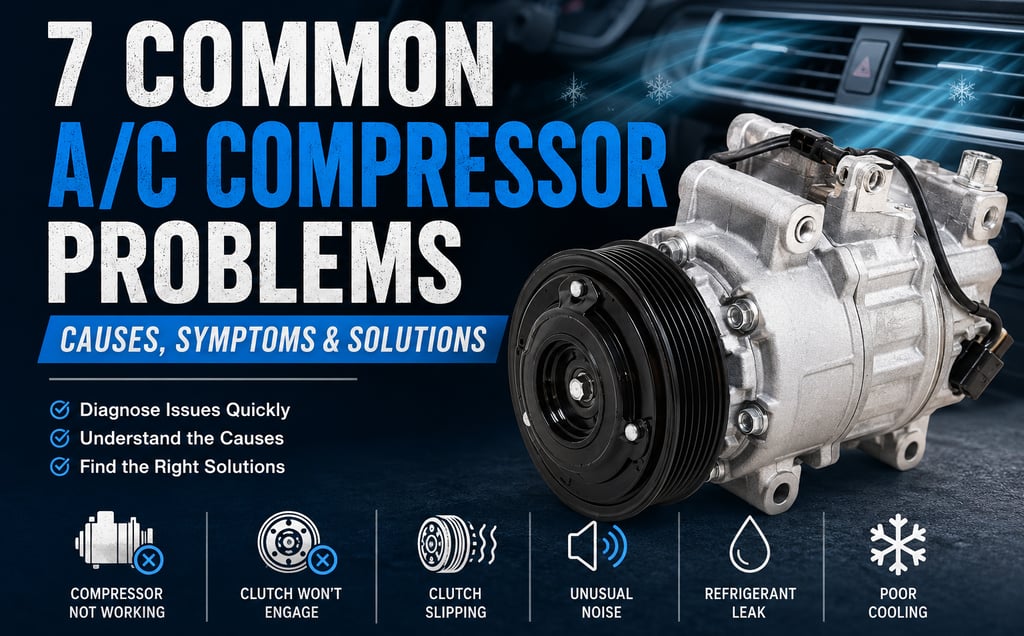
7 Common A/C Compressor Problems: Causes, Symptoms & Solutions
Discover the most common A/C compressor problems and learn how to identify their causes, symptoms, and repair solutions.
TROUBLESHOOTING
Claire
7/2/20263 min read
Introduction
A faulty A/C compressor can lead to poor cooling, unusual noises, refrigerant leaks, or complete air conditioning failure. This guide covers the most common A/C compressor problems, their symptoms, possible causes, and recommended solutions to help you diagnose issues quickly and restore reliable cooling performance.
7 Common
A/C Compressor Problems
1. A/C Compressor Does Not Work
Symptoms
No cold air from the vents
Compressor does not engage
Compressor pulley does not rotate
Possible Causes
Loose or broken drive belt
Low compressor oil
Damaged compressor bearing
Electrical system failure
Faulty compressor clutch
Recommended Solutions
Adjust or replace the drive belt
Refill compressor oil
Replace damaged bearings
Inspect electrical wiring, relays, and fuses
Repair or replace the compressor clutch
Tip: Before replacing the compressor, always check the fuse, relay, clutch, and refrigerant level, as these are more common causes of failure.
2. A/C Compressor Clutch Does Not Engage
Symptoms
Compressor clutch does not click
Pulley rotates but compressor remains inactive
Warm air from the vents
Possible Causes
Low or empty refrigerant
Broken wiring
Poor clutch coil connection
Damaged electrical components
Recommended Solutions
Recharge the refrigerant
Repair damaged wiring
Replace the clutch coil
Repair or replace faulty electrical components
Tip: Low refrigerant pressure often prevents the clutch from engaging to protect the compressor.
3. Compressor Clutch Slips or Engages Intermittently
Symptoms
Cooling comes and goes
Clutch slips during operation
Compressor cycles frequently
Possible Causes
Loose drive belt
Oil contamination on the clutch surface
Uneven clutch contact
Incorrect clutch air gap
Excessive system pressure
Air trapped in the refrigerant system
Poor condenser cooling
Compressor seizure
Recommended Solutions
Adjust belt tension
Clean the clutch surface
Correct clutch alignment
Reset the clutch air gap
Reduce excessive system pressure
Recover and recharge refrigerant
Improve condenser cooling
Replace the compressor if seized
4. A/C Compressor Noise
Symptoms
Grinding noise
Rattling sound
Knocking while the A/C is running
Possible Causes
Low compressor oil
Loose mounting bolts
Internal compressor wear
Excessive clearance between moving parts
Recommended Solutions
Add compressor oil
Tighten mounting bolts
Repair or replace the compressor
Tip: Ignoring unusual compressor noise may lead to complete compressor failure.
5. Compressor Clutch Noise
Symptoms
Squealing noise
Chirping sound
Noise only when the A/C is switched on
Possible Causes
Pulley rubbing against the clutch housing
Incorrect clutch clearance
Worn pulley bearing
Recommended Solutions
Repair or replace the clutch
Adjust the clutch air gap
Replace the pulley bearing
6. A/C Compressor Refrigerant Leak
Symptoms
Weak cooling performance
Refrigerant oil around the compressor
Refrigerant pressure drops rapidly
Possible Causes
Loose hose connections
Damaged O-rings
Loose fittings
Worn shaft seal
Compressor housing leakage
Recommended Solutions
Tighten fittings
Replace O-rings
Install new seals
Replace the shaft seal
Replace the compressor if necessary
Tip: UV dye or an electronic leak detector can help locate refrigerant leaks more accurately.
7. Poor Cooling Not Caused by the Compressor
Symptoms
Weak cooling
Cooling only while driving
Cabin temperature remains high
Possible Causes
Low refrigerant charge
Excess refrigerant
Excess compressor oil
Air inside the system
Moisture contamination
Blocked refrigerant lines
Incorrect expansion valve opening
Recommended Solutions
Recharge refrigerant
Recover excess refrigerant
Adjust compressor oil level
Evacuate and recharge the system
Replace the receiver drier
Clean refrigerant lines
Replace or adjust the expansion valve
Tip: Not every cooling issue is caused by the compressor. A complete A/C system inspection is recommended before replacing major components.
Quick Diagnosis Table
Compressor does not work → Electrical fault, damaged clutch → Check wiring, relay, fuse, and clutch
Clutch does not engage → Low refrigerant → Recharge the refrigerant
Clutch slips → Incorrect air gap → Adjust clutch clearance
Compressor noise → Bearing or internal damage → Replace bearing or compressor
Refrigerant leak → Worn seals or O-rings → Replace seals and recharge refrigerant
Weak cooling → Refrigerant or system issue → Inspect the complete A/C system
Frequently Asked Questions
Why is my A/C compressor not engaging?
The most common causes are low refrigerant pressure, electrical faults, a damaged clutch coil, or a blown fuse.
Can I replace only the compressor clutch?
Yes. If the compressor itself is still in good condition, replacing only the clutch is often a cost-effective repair.
Should I replace the compressor immediately?
Not necessarily. Many A/C problems are caused by low refrigerant, electrical issues, worn belts, or clutch failures rather than the compressor itself.
What causes A/C compressor noise?
Common causes include low compressor oil, worn bearings, loose mounting bolts, or internal compressor damage.
How can I prevent compressor failure?
Regularly inspect the drive belt, maintain the correct refrigerant charge, replace the receiver drier when necessary, and repair refrigerant leaks promptly.
Conclusion
Many automotive A/C problems share similar symptoms, making accurate diagnosis essential before replacing expensive components. By identifying the symptoms, checking the most likely causes, and following the appropriate repair procedures, technicians can reduce repair costs, improve efficiency, and extend the service life of the air conditioning system.
Looking for Reliable A/C Compressors?
Whether you need aftermarket A/C compressors, remanufactured compressors, or OE-quality replacement parts, choosing high-quality components is essential for long-term performance and reliability.
If you're looking for dependable automotive air conditioning parts for wholesale or distribution, feel free to contact our team for professional product recommendations and technical support.
FHAS Auto Parts
A brand of Chengdu Fuzhihui Auto Parts Co., Ltd.
Contact Us
Email: fuzhihui.coco@gmail.com
Coco Huang| Business Manager
Company


Support
Legal
Global Auto Parts Supplier
Professional supplier of alternators, starters and compressors.
© 2026 FHAS Auto Parts. Chengdu Fuzhihui Auto Parts Co., Ltd. All Rights Reserved.
Whatsapp: 86-15528256866