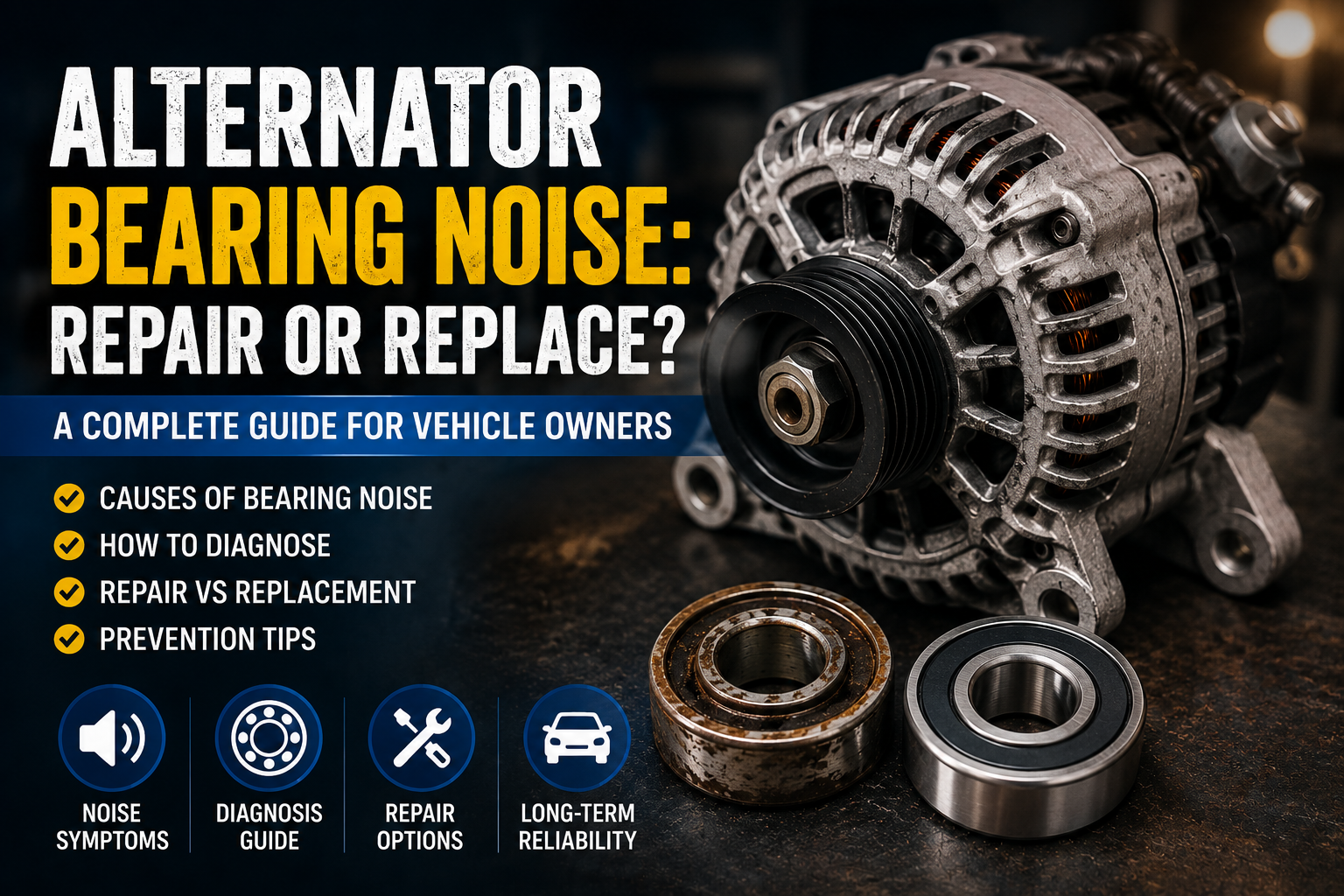
Alternator Bearing Noise: Repair or Replace?
Grinding or humming noises from the alternator are often caused by worn bearings. This guide explains how to diagnose bearing failure and determine whether repairing or replacing the alternator is the most cost-effective solution.
TROUBLESHOOTING
Claire
6/12/20262 min read
Introduction
Alternator bearing failure is one of the most common causes of alternator noise. What starts as a faint humming sound can eventually lead to charging failure, damaged internal components, and vehicle breakdowns.
This article focuses specifically on alternator bearing noise, how to identify it, and whether repairing or replacing the alternator is the better option.What Does a Bad Alternator Bearing Sound Like?
Alternator bearings support the rotor shaft and allow it to rotate at high speed.
When bearings wear out, drivers may notice:
Humming noise
Growling sound
Grinding noise
Rumbling vibration
The noise typically becomes louder as engine RPM increases.
What Causes Alternator Bearing Failure?
Several factors can shorten bearing life.
High Mileage
Most bearings gradually wear over time.
Vehicles with:
High mileage
Frequent stop-and-go driving
Heavy electrical loads
are more likely to experience bearing wear.
Heat Damage
Alternators operate in a high-temperature environment.
Excessive heat can:
Break down bearing grease
Accelerate wear
Cause bearing seizure
Contamination
Water, dirt, and oil contamination can enter the bearing assembly and damage internal rolling elements.
Common causes include:
Engine oil leaks
Power steering fluid leaks
Driving through deep water
Belt Tension Problems
Incorrect belt tension places additional stress on bearings.
Both conditions are harmful:
Belt too tight
Belt too loose
How to Confirm Bearing Failure
Manual Rotation Test
After removing the belt:
Rotate the pulley by hand.
Healthy bearings should feel:
Smooth
Quiet
Consistent
Faulty bearings may feel:
Rough
Notchy
Stiff
Listen for RPM-Related Noise
Bearing noise generally follows engine speed.
As RPM increases:
Noise becomes louder
Vibration becomes more noticeable
Check for Pulley Play
Move the pulley side to side.
Excessive movement often indicates worn bearings.
Can Alternator Bearings Be Replaced?
Yes.
In many alternators, both front and rear bearings can be replaced.
Bearing replacement generally involves:
Removing the alternator.
Disassembling the housing.
Pressing out old bearings.
Installing new bearings.
Reassembling and testing the unit.
Specialized tools are usually required.
Repair vs Replacement
Repair the Alternator If:
Bearings are the only failed component.
Rotor and stator remain undamaged.
Voltage output is normal.
Housing is in good condition.
Repair can be cost-effective for relatively new alternators.
Replace the Alternator If:
Bearing failure has caused rotor contact.
Voltage regulator is also faulty.
Rectifier damage is present.
Internal windings are damaged.
The alternator has high mileage.
In these situations, complete replacement often provides better long-term reliability.
Other Components That Can Mimic Bearing Noise
Before replacing bearings, inspect other related parts.
Overrunning Alternator Pulley (OAP)
A seized OAP pulley can produce:
Clicking
Rattling
Vibration
Replacement is usually straightforward.
Belt Tensioner
A worn tensioner may create noises similar to bearing failure.
Symptoms include:
Belt flutter
Intermittent squealing
Vibration
Cooling Fan Damage
Some alternators use internal cooling fans.
Broken fan blades may create:
Scraping sounds
Imbalance vibration
Preventing Future Bearing Problems
To maximize alternator life:
Inspect belts regularly.
Replace worn tensioners.
Repair oil leaks promptly.
Avoid high-pressure water directly on the alternator.
Check charging system performance during routine maintenance.
Regular inspection can significantly reduce the risk of unexpected alternator failure.
Conclusion
Alternator bearing noise is often the earliest sign of alternator wear. Early diagnosis can prevent severe internal damage and costly roadside breakdowns.
Whether you choose bearing replacement or complete alternator replacement depends on the overall condition of the unit. Careful inspection of bearings, pulleys, voltage output, and internal components will help determine the most cost-effective solution for long-term reliability.
FHAS Auto Parts
A brand of Chengdu Fuzhihui Auto Parts Co., Ltd.
Contact Us
Email: fuzhihui.coco@gmail.com
Coco Huang| Business Manager
Company


Support
Legal
Global Auto Parts Supplier
Professional supplier of alternators, starters and compressors.
© 2026 FHAS Auto Parts. Chengdu Fuzhihui Auto Parts Co., Ltd. All Rights Reserved.
Whatsapp: 86-15528256866