How to Diagnose and Repair Car Air Conditioner Noise
Learn how to diagnose and repair car air conditioner noise with this step-by-step guide. Discover how to inspect compressors, belts, blower motors, refrigerant systems, and AC clutches.
TROUBLESHOOTING
Claire
6/12/20264 min read
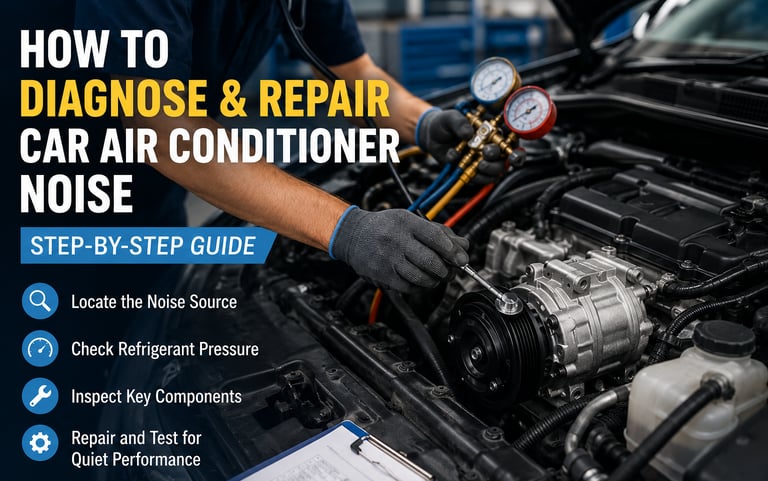
Introduction
Unusual noises from a vehicle's air conditioning system often indicate developing mechanical or refrigerant-related issues. While some noises may be caused by minor problems such as debris in the blower motor, others can signal serious compressor damage that requires immediate attention.
Proper diagnosis is essential before replacing any components. This guide outlines a practical troubleshooting process used by professional technicians to identify and repair common automotive AC noise problems.
If you're unsure about the cause of the noise, we recommend first reading our article:
Related Article: Why Is My Car AC Making Noise? 6 Common Causes Explained
Tools Required for Diagnosis
Having the proper tools can significantly improve diagnostic accuracy.
Basic Inspection Tools
Flashlight
Screwdriver set
Mechanic's stethoscope
Inspection mirror
Professional AC Service Tools
AC manifold gauge set
Refrigerant leak detector
Vacuum pump
Refrigerant recovery machine
Some refrigerant-related procedures should only be performed by qualified technicians.
Step 1: Confirm When the Noise Occurs
Before opening the hood, determine the operating conditions that trigger the noise.
Key Questions
Does the noise only occur when the AC is switched on?
Does it become louder at higher blower speeds?
Does engine RPM affect the noise?
Is cooling performance reduced?
These observations help narrow down potential causes and prevent unnecessary repairs.
Quick Diagnostic Clue
Noise only when AC is ON:Compressor or clutch
Noise changes with engine speed:Belt or pulley
Noise changes with fan speed:Blower motor
Hissing with weak cooling:Refrigerant issue
Step 2: Inspect the Drive Belt and Pulleys
The drive belt system is one of the easiest components to inspect and one of the most common causes of AC-related noises.
What to Check
Belt cracks
Belt glazing
Belt contamination
Improper belt tension
Signs of Belt Problems
High-pitched squealing
Chirping during startup
Noise that increases during acceleration
Repair Solution
Replace worn belts and damaged pulleys according to manufacturer specifications.
If a pulley bearing feels rough or produces noise when rotated by hand, replacement is recommended.
Step 3: Check the Blower Motor
If the noise originates from inside the cabin, inspect the blower motor assembly.
Common Symptoms
Buzzing
Rattling
Vibration through dashboard vents
Inspection Procedure
Remove the cabin air filter.
Check for leaves, dust, or foreign objects.
Access the blower motor housing.
Rotate the blower wheel manually.
Repair Solution
Remove debris from the blower housing.
Replace damaged blower wheels.
Replace the blower motor if bearing wear is present.
Step 4: Measure Refrigerant Pressure
Improper refrigerant pressure can create unusual sounds and reduce cooling efficiency.
Common Symptoms
Hissing noise
Bubbling sounds
Poor cooling performance
Inspection Procedure
Connect an AC manifold gauge set and compare high-side and low-side pressures with manufacturer specifications.
Possible Findings
Observation:Possible Cause
Low pressure:Refrigerant leak
High pressure:Condenser blockage
Pressure fluctuation:Compressor issue
Repair Solution
Locate and repair leaks.
Replace damaged O-rings.
Recharge refrigerant according to specifications.
Step 5: Inspect the AC Compressor
The compressor is the most expensive and critical component in the air conditioning system.
Warning Signs
Grinding noises
Knocking sounds
Metal particles in refrigerant oil
Reduced cooling performance
Inspection Procedure
Start the engine.
Turn on the AC system.
Listen directly at the compressor housing.
Observe vibration and clutch operation.
Repair Solution
If internal compressor damage is confirmed, replacement is usually more economical and reliable than rebuilding.
Step 6: Check the Compressor Clutch
The compressor clutch engages and disengages repeatedly during operation.
Common Symptoms
Clicking sounds
Intermittent rattling
Noise when the compressor cycles
Inspection Procedure
Inspect clutch surface wear.
Measure clutch clearance.
Verify proper clutch engagement.
Repair Solution
Replace worn clutch components or install a new clutch assembly when necessary.
Step 7: Perform Final Verification
After repairs have been completed, verify that the problem has been eliminated.
Verification Checklist
✔ AC system operates quietly
✔ Cooling performance is normal
✔ Belt system runs smoothly
✔ Refrigerant pressures are within specifications
✔ No abnormal vibration is present
Road Test
Operate the vehicle under various driving conditions while monitoring AC performance and noise levels.
Common Repair Mistakes to Avoid
Replacing Parts Without Diagnosis
Many vehicle owners replace compressors unnecessarily when the actual problem is a worn belt or faulty blower motor.
Ignoring Refrigerant Leaks
Adding refrigerant without repairing the leak only provides a temporary solution.
Overlooking Cabin Air Filters
A clogged cabin filter can cause airflow restrictions and unusual noises that are easily mistaken for major component failures.
Using Incorrect Refrigerant Charges
Overcharging or undercharging the system can create performance problems and compressor damage.
When Should You Seek Professional Repair?
Professional service is recommended when:
Refrigerant recovery or charging is required.
Compressor replacement is necessary.
Electrical diagnosis is needed.
Specialized AC equipment is unavailable.
Proper diagnosis can significantly reduce repair costs and prevent unnecessary component replacement.
Frequently Asked Questions
Can a bad compressor cause a squealing noise?
Yes. Worn compressor bearings may produce squealing, grinding, or metallic noises.
Why does my AC make noise but still cool properly?
The issue may involve the blower motor, clutch assembly, or belt system before cooling performance is affected.
Can low refrigerant damage the compressor?
Yes. Low refrigerant levels reduce lubrication and may lead to premature compressor wear.
How much does AC compressor replacement typically cost?
Costs vary by vehicle model and compressor type, but compressor replacement is generally one of the most expensive AC repairs.
Conclusion
Diagnosing air conditioner noise requires a systematic inspection process. By checking the belt system, blower motor, refrigerant pressures, compressor, and clutch assembly, technicians can accurately identify the root cause of most AC-related noises.
Early diagnosis not only restores comfort but also helps prevent costly damage to major air conditioning components.
Related Articles
Why Is My Car AC Making Noise? 6 Common Causes Explained
Symptoms of a Bad AC Compressor
How Does an Automotive AC Compressor Work?
Looking for Reliable AC Compressors?
Chengdu Fuzhihui Auto Parts Co., Ltd. supplies high-quality automotive AC compressors, alternators, starter motors, and related components for distributors, wholesalers, and repair shops worldwide.
Contact us today for product information, OEM customization, and competitive quotations.
FHAS Auto Parts
A brand of Chengdu Fuzhihui Auto Parts Co., Ltd.
Contact Us
Email: fuzhihui.coco@gmail.com
Coco Huang| Business Manager
Company


Support
Legal
Global Auto Parts Supplier
Professional supplier of alternators, starters and compressors.
© 2026 FHAS Auto Parts. Chengdu Fuzhihui Auto Parts Co., Ltd. All Rights Reserved.
Whatsapp: 86-15528256866